




MELYT and CONFEBUS join forces to promote female talent in bus transport
· Coinciding with the celebration of 8 March, International Women’s Day.
· CONFEBUS is committed to bringing more women into the sector and addressing the shortage of professionals.
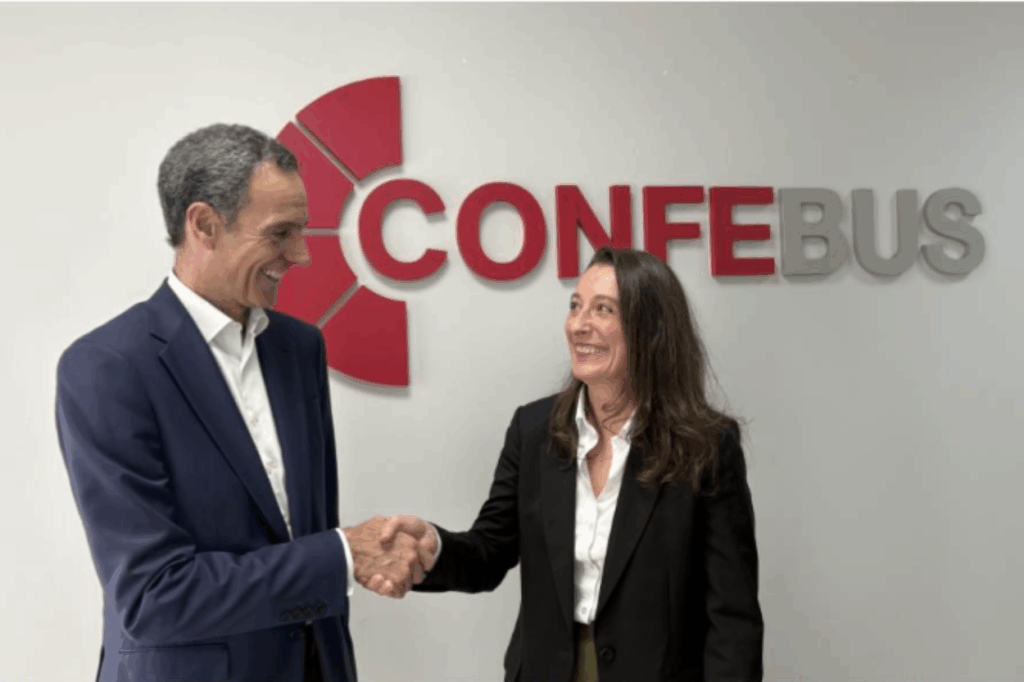
Madrid, 6 March 2026. – Coinciding with the week in which International Women’s Day is celebrated on 8 March, the Association of Women in Logistics and Transport (MELYT) and the Spanish Bus Transport Confederation (CONFEBUS) have reached a long-term strategic collaboration agreement to develop joint actions that promote the incorporation of female talent into the bus transport sector.
MELYT is a community of transport and logistics professionals, with multimodal representation, which already has more than 750 members. It was officially founded two years ago with the intention of becoming a space for connecting, learning and growing.
According to Miryam Torrecilla, vice-president of the association, “At MELYT, we work to raise the profile and promote female talent in logistics and transport, two key activities for the development of the economy and society, which represent 6.9% of GDP. We want to break down barriers, inspire new generations and open up opportunities for all women who wish to lead and contribute in this exciting field, from any position.‘ She adds: ’A more diverse sector at all hierarchical levels will result in a better society. This strategic alliance with CONFEBUS will serve to make steady progress towards the common goal of more equitable and inclusive mobility in Spain.”
The agreement is part of CONFEBUS’s work to make the sector more equal, guaranteeing professional rights and promoting the inclusion of women in the workplace, recognising the great potential this represents for the sector.
Road passenger transport faces an enormous problem when it comes to finding professional drivers, both nationally and across Europe. In this adverse environment, any action aimed at promoting the sector as a career opportunity for women is very positive. The incorporation of women will help alleviate the shortage of skilled labour and, at the same time, increase the female presence in a traditionally male-dominated activity. Furthermore, MELYT is committed to organisations that enrich themselves through diversity and help to build a more competitive and sustainable sector.
In 2023 alone, there were more than 100,000 vacancies in Europe, 5,000 of them in Spain, which limits the sector’s potential for economic development.
Gender equality is both ‘an opportunity and a challenge for the future of our mobility,’ says Rafael Barbadillo, president of CONFEBUS, adding that Spain is one of the three EU countries where the bus transport sector employs the most people.
However, it is important to lead change in a ‘deeply masculinised’ sector, which needs to incorporate more women in management and driving positions to ensure people’s mobility. ‘Currently, women represent only 14% of drivers, when before the pandemic we reached 19%, even exceeding the European average. Recovering and surpassing that leadership is a priority,’ says Barbadillo.
Greater involvement of women in the bus transport sector would have numerous positive effects. This is an issue that ‘is not only a matter of justice or equality, but also of economic and social necessity,’ concludes Barbadillo.
ABOUT THE ASSOCIATION #SomosMELYT
MELYT is a national forum for promoting the incorporation and active participation of women in logistics and transport, regardless of their role or job responsibilities. It was established in March 2024 and has more than 750 members committed to this mission. It was created by a multimodal representation of professional women, with a global vision and objectives, seeking to support and be a reference point to inspire and contribute to gender diversity in the sector.
ABOUT CONFEBUS
CONFEBUS is the Spanish Bus Transport Confederation, the legitimate representative and defender of the interests of Spanish bus companies of all sizes and activities (regular, urban, discretionary, school, tourist transport, bus stations, etc.). With more than 30 federated regional and sectoral organisations and almost 2,000 associated transport companies, it is the most representative organisation in the sector, both at an institutional and business level, representing more than 70% of the bus transport sector (2025: CNTC-Ministry of Transport).
The bus transport sector has a turnover of more than €6.5 billion, employs around 100,000 people, with 2,700 companies and more than 47,000 vehicles transporting more than 3.572 billion passengers per year (62% of public transport journeys are made by bus), with a network of over 75,000 kilometres that regularly connects more than 8,000 population centres throughout the country, as well as being a key link in the country’s main industry, tourism.
Subscribe our newsletter
MELYT and CONFEBUS join forces to promote female talent in bus transport
· Coinciding with the celebration of 8 March, International Women’s Day. · CONFEBUS is committed to bringing more women into the sector and addressing the
Beyond the noise of trade fairs, managing change
When walking through the halls of an event as vibrant as Logistics & Automation, it is easy to be seduced by the industry’s ever-increasing brilliance.
Interview with Carlos Moreno: Leading Transport Transformation with SAP Transportation Management
1. Carlos, could you briefly tell us what your role is at Westernacher and how you support your clients in optimising their logistics processes? As
The industry does not have a production problem, it has a synchronisation problem.
Gabriel OcioCommercial Director, Supply Chain SolutionsZucchetti Spain For years, the focus of the industry has been on improving production capacity: more automation, more information and
Share this article